A folder of scientific papers is not yet a usable research dataset. Tables may use different identifiers, a figure may contain information missing from the text, and two measurements that look comparable may describe different experiments. Someone has to connect those details before an attractive chart becomes meaningful.
That unglamorous work sits behind a new Google Antigravity for science demonstration. The interesting question is how an AI agent can help a researcher move from scattered evidence to an analysis that another person can inspect.
What DeepMind announced on November 3
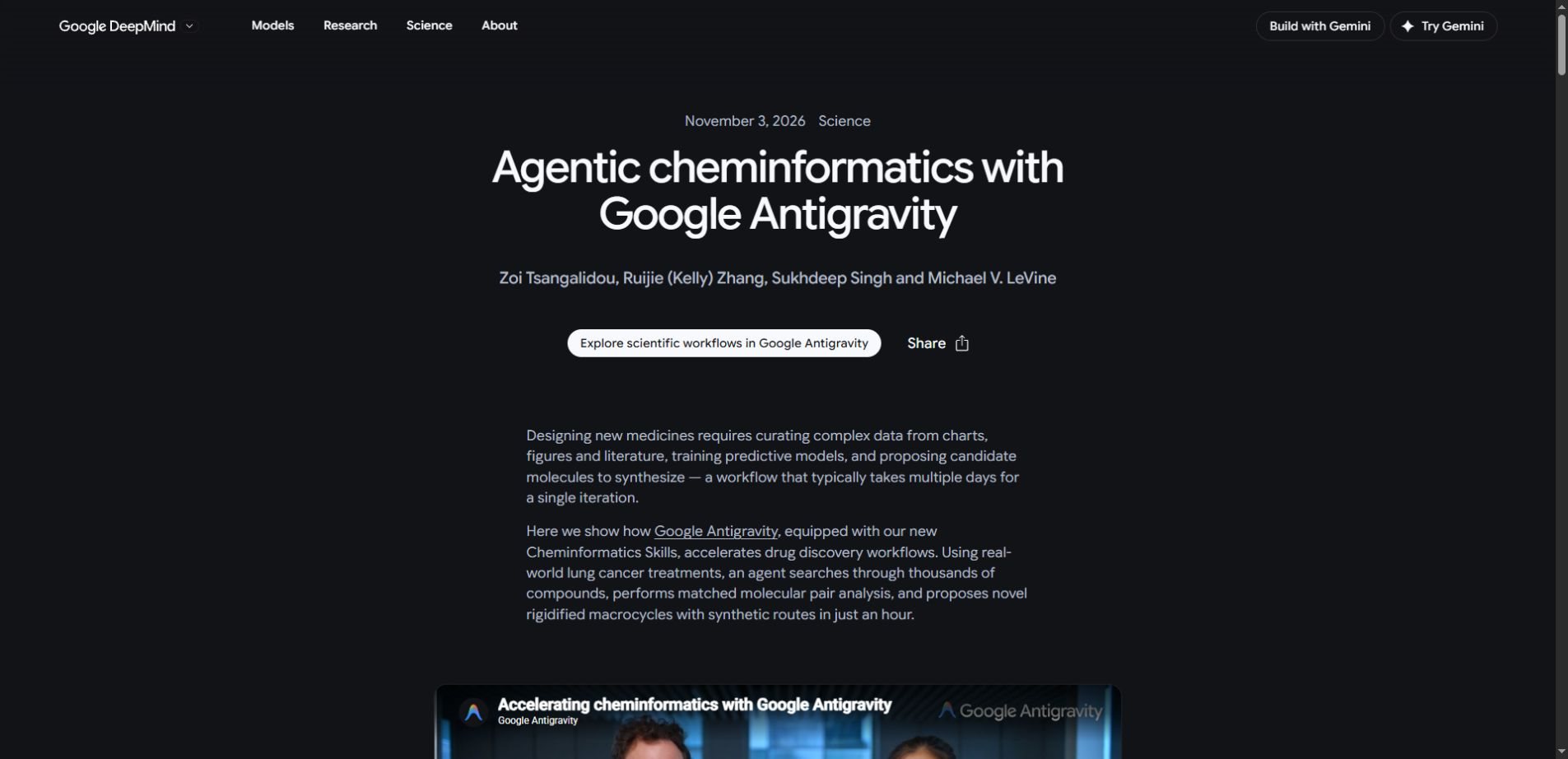
In its November 3, 2026 announcement, Google DeepMind introduced Cheminformatics Skills for Antigravity. The described system combines an agent with established chemistry software and database connections, including RDKit, ChEMBL and PubChem. The language model coordinates the workflow while specialist tools carry out molecular operations.
The published walkthrough follows literature gathering, compound curation, analysis and proposed designs. It is a vendor demonstration, not an independent benchmark. The article reports a workflow completed in about an hour; that should not be interpreted as a general promise about every research project.
The distinction matters because scientific work contains several different jobs. Searching for a paper, recognizing what a measurement represents, calculating a molecular property and deciding what to test next do not all require the same kind of reasoning or evidence.
The central idea: an agent can coordinate a research workflow, but every important result still needs a traceable source, a defined method and a reviewer who understands the field.
Why chemistry needs more than a conversational answer
Cheminformatics means using computing methods to represent, organize and analyze chemical information. Even for a reader outside chemistry, the basic problem is familiar: messy records must become consistent enough to compare.
A written name, a drawing and a machine-readable record may all refer to a molecule. A research system needs to preserve identity while moving between formats. A fluent description alone does not establish that a record was interpreted correctly.
The official RDKit overview describes an open-source toolkit with molecular operations in two and three dimensions, descriptor generation for machine learning and database functionality. These are examples of dedicated computational capabilities an agent can call rather than attempting every calculation through generated prose.
Think of the difference between asking someone to explain a spreadsheet formula and actually running the formula against a known table. Both activities can help, but they provide different evidence. A reliable workflow records which one produced each result.
A fictional research folder: what should survive each step?
Imagine a researcher studying a harmless, invented collection of materials called Series K. The folder contains three papers, two spreadsheets and a slide deck. This is an editorial example, not a description of DeepMind’s experiment or an instruction to synthesize a compound.
The researcher wants a table of reported measurements, with a link back to each original observation. An agent could help find candidate rows and prepare a draft table. The first success criterion is whether the table preserves what the documents actually say.
Keep identifiers attached to evidence
Suppose one spreadsheet uses “K-07” and a paper calls the same sample “material seven.” The agent should provide the evidence for connecting them. If that connection is uncertain, it belongs in a review queue rather than becoming an invisible assumption.
The output should retain a source document, page or table location, original label and any transformation applied. Otherwise, correcting an error later can require repeating the entire search. A polished summary without those details is difficult to audit.
Preserve the meaning of a number
Now suppose two sources report different values for K-07. The tempting shortcut is to average them or keep whichever looks more favorable. A reviewer should first check whether the conditions, units and measurement methods match.
An agent can make disagreement easier to find by grouping the records and exposing their metadata. It should not erase disagreement just to produce a clean chart. In research, an untidy but faithful table is often more useful than a tidy table built on hidden guesses.
Separate observation from interpretation
A reported measurement, a calculated property and a model prediction should have different labels. If they share a column without provenance, a reader may mistake an estimate for experimental evidence.
This is where structured outputs help. Ask for separate fields describing the value, its type, source, units and review status. Our context engineering guide explains why the information available to an assistant affects its work; research also requires preserving that information after the answer is produced.
A useful division of responsibility
The following table is an editorial framework for assessing a research agent. It is not a product specification or a claim that every Antigravity workflow automatically enforces these boundaries.
| Work | Useful agent contribution | Evidence to retain |
|---|---|---|
| Find records | Locate potentially relevant documents. | Search scope and source links. |
| Organize data | Draft a consistent table and flag conflicts. | Original labels, units and unresolved cases. |
| Run tools | Coordinate defined computational operations. | Inputs, tool versions and settings. |
| Explore patterns | Prepare charts and questions for review. | Filters, exclusions and underlying rows. |
| Choose next steps | Propose options with reasons. | Assumptions and expert approval. |
The point is to make the handoffs visible. If an agent switches from retrieving information to estimating a missing value, the user should be able to see that change. If a tool fails, a plausible written response should not be treated as a successful calculation.
What a dashboard can—and cannot—tell you
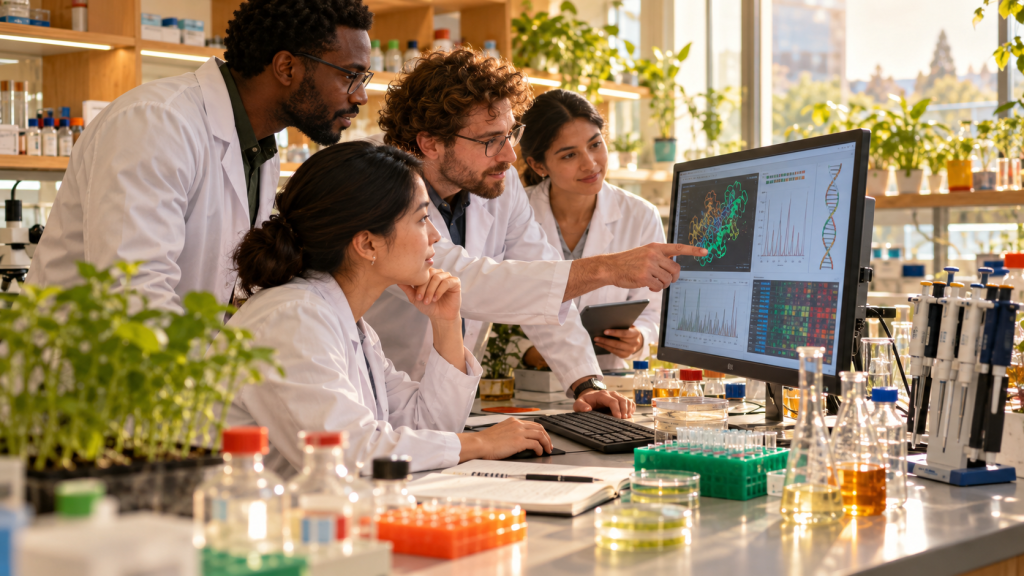
DeepMind’s published example includes an interactive compound viewer and analysis charts. Such a view can help scientists inspect records and relationships. A screenshot illustrates the interface; it does not independently validate the underlying dataset or every interpretation.
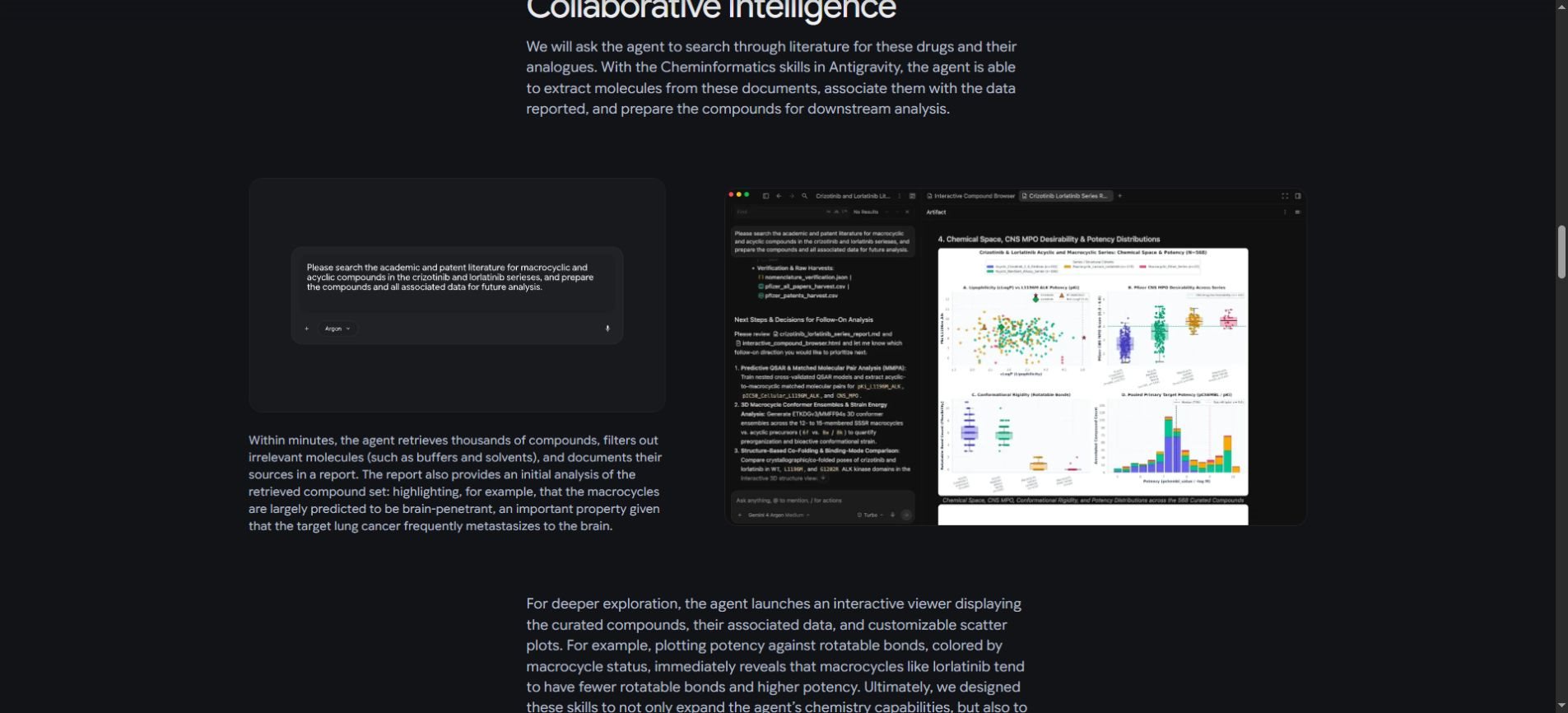
For the fictional Series K project, a useful dashboard would let the reviewer move from a plotted point back to the source row. It would show which filters are active and which records were excluded. Those controls help turn a chart into something a colleague can investigate.
A chart can also make a weak dataset look persuasive. Before interpreting a trend, ask how many records support it, whether repeated records were counted separately and whether missing observations are concentrated in one part of the data.
When predictive models enter the workflow, a good-looking fit on familiar data is not enough. Evaluation needs examples kept separate from the modeling process and a clear account of what the test is intended to represent. The right design depends on the scientific question.
Five questions for a first research-agent trial
- Can I retrace the result? Select one output and follow it back to its original evidence.
- Are transformations visible? Look for changes to identifiers, units, filtering and missing values.
- Can it acknowledge uncertainty? Give it an ambiguous record and inspect whether it flags the problem.
- Can another person repeat the work? Retain the inputs, instructions, software versions and settings.
- Does it distinguish a hypothesis from a finding? Check labels on generated suggestions and predictions.
Start with a small collection you are authorized to use and understand well enough to check manually. Expanding a workflow before reviewing the first few records makes errors harder to isolate. Our guide to testing AI assistants with fictional data offers a way to practice evaluation without beginning with confidential company material.
Access and the boundary of the claim
DeepMind says the skills are available through Antigravity’s Science plugin. Its announcement also describes an application-based offer for 10,000 scientists to receive six months of the highest usage tier, subject to eligibility, capacity and selection. Check the official announcement and access links for current terms.
Availability does not establish fitness for a particular laboratory or dataset. Before adopting a workflow, confirm how files are handled, which tools may run and who reviews outputs. Permissions should match the task rather than expanding simply because the agent can use more software.
Most importantly, a computational suggestion is a proposal for further investigation. A model score is not evidence that a substance will work in people, and this announcement does not establish a new approved treatment. Scientific validation remains a separate process.
Common questions
What does “agentic cheminformatics” mean?
It describes an AI agent coordinating computational work with chemical information. In practical terms, that can involve finding records, organizing them, calling specialist software and presenting results for a researcher to review.
Does this replace a scientist?
The useful role is assistance across a workflow. Defining the question, assessing evidence and interpreting the significance of a result still require scientific expertise. Faster preparation does not remove those responsibilities.
Did Unlimited AI test the plugin?
No. This article explains the public announcement and provides an original fictional example for evaluating research workflows. It does not report first-hand testing or reproduce the demonstrated results.
The result worth looking for
The strongest outcome is not simply a larger table or a faster report. It is an analysis whose sources and assumptions remain visible enough for another researcher to challenge and improve it.
That makes this announcement relevant beyond chemistry. As agents gain access to specialist tools, the quality of their work will depend on the evidence preserved between steps. Ask what changed, what was computed and what remains uncertain before treating the final answer as a finding.