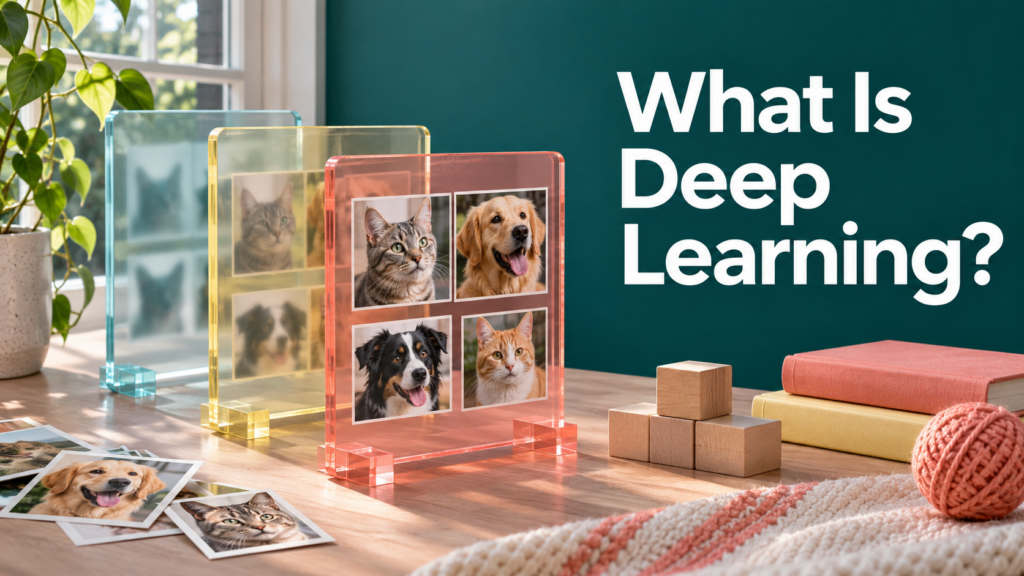
Deep learning is a branch of machine learning that uses neural networks with multiple layers to learn patterns from data. In photo classification, a network takes numerical pixel values as input and produces scores for possible categories. Training changes the network’s parameters so those scores become more useful for the task.
Suppose you want to sort pet photos into cats and dogs. You could write rules about ears, noses, and fur. A deep learning model can learn useful visual patterns from examples instead. The photos you train it on and the way you test it determine whether it works on pictures beyond that collection.
What makes the learning “deep”?
A neural network passes values through a sequence of layers. Each layer transforms the values it receives using learned weights and other parameters. Hidden layers sit between the input and the output. Deep networks combine several transformations, which lets them represent complex relationships. Google’s glossary illustrates a simple network with two hidden layers. Google’s neural network definition.
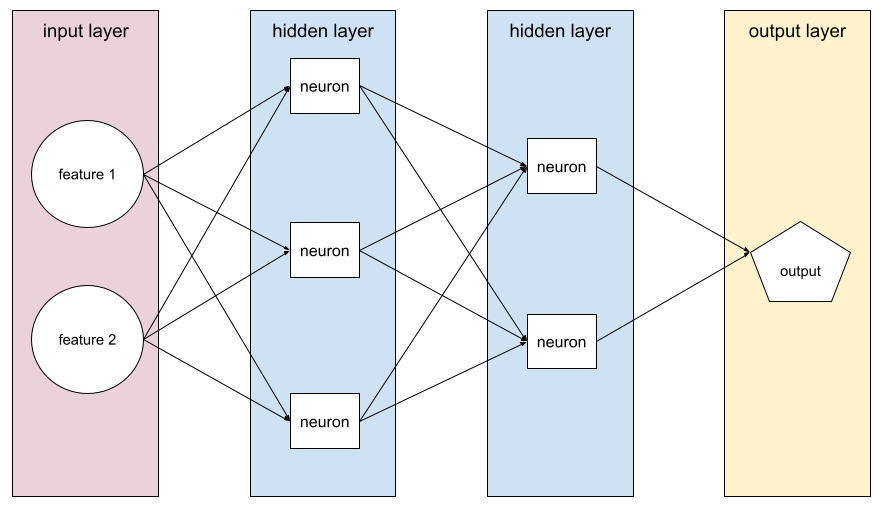
For images, early layers in some networks learn patterns such as edges and textures. Later layers can combine them into more complex features. The exact representations depend on the architecture, task, and training data. Individual units don’t come with a dependable label such as “cat ear.”
Follow one photo through a classifier
First, the image is resized and prepared in the same way as the training images. Its pixel values enter the model. The layers transform those values, and the final layer produces category scores. A chosen rule then turns those scores into a label, such as “dog.”
For an unfamiliar picture, the model might still assign a high score to one category. Read that score in the context of how the model was evaluated. If the classifier learned only cats and dogs, it needs a separate way to handle a rabbit or an empty room. Otherwise, the decision rule may assign one of its known labels.
How training changes the model
| Part of training | What happens | Pet-photo example |
|---|---|---|
| Prediction | The model processes a batch of examples. | It produces category scores for each photo. |
| Loss | A calculation measures how predictions differ from the training targets. | A confident dog prediction on a cat photo contributes to the error. |
| Backpropagation | The training system calculates how parameters contributed to the loss. | It computes gradients through the network’s layers. |
| Update | An optimizer adjusts parameters using those gradients. | The next pass uses the revised parameters. |
Training repeats this cycle over many batches. The loss helps direct the updates, but a falling training loss alone doesn’t show that the model handles new photos well. Google’s training guide explains backpropagation and common training problems. Google’s backpropagation guide.
Check whether it learned a useful pattern
Imagine that most dog photos in your collection were taken outdoors, while most cat photos were taken on sofas. The model may use the background as a shortcut. Test it on indoor dog photos and outdoor cat photos, then inspect the mistakes. That comparison helps you find gaps that an overall accuracy score can hide.
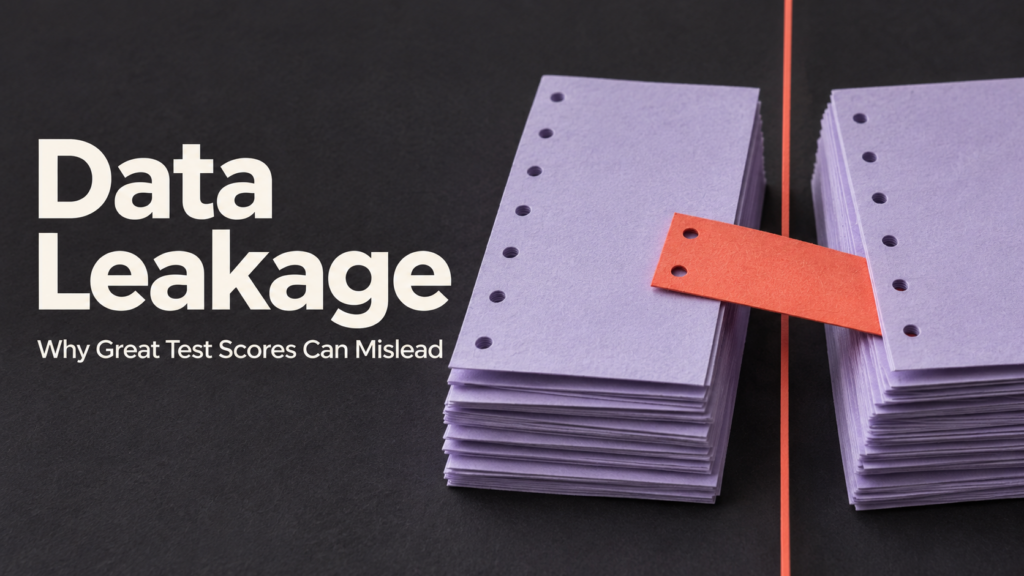
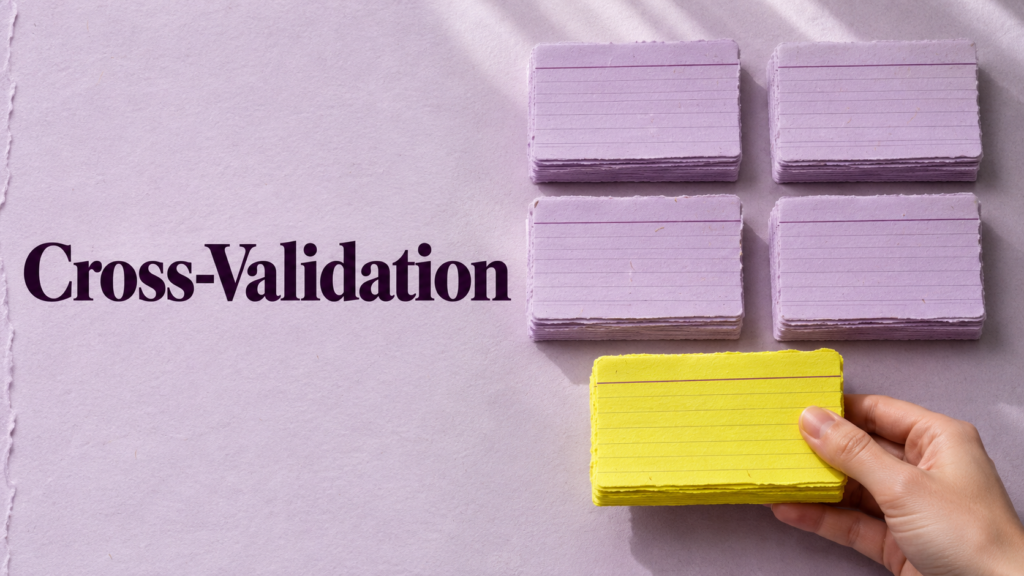
Keep training, validation, and final test data separate. Training data updates the parameters. Validation data guides choices such as model size or training duration. Reserve a final test set for an assessment after those choices are made. Keep related or duplicate photos together when splitting the data so near-identical shots don’t make the evaluation look easier than real use.
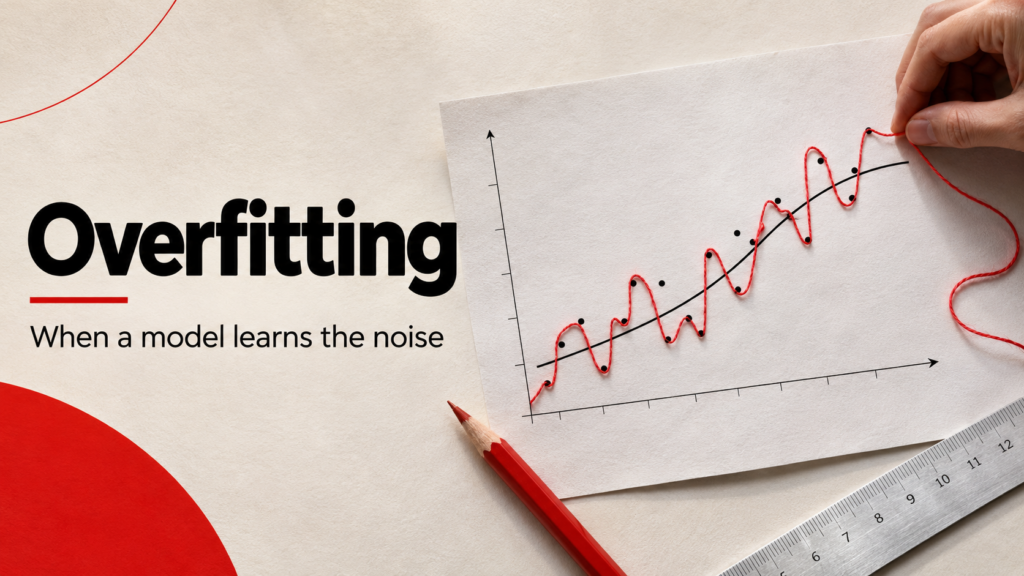
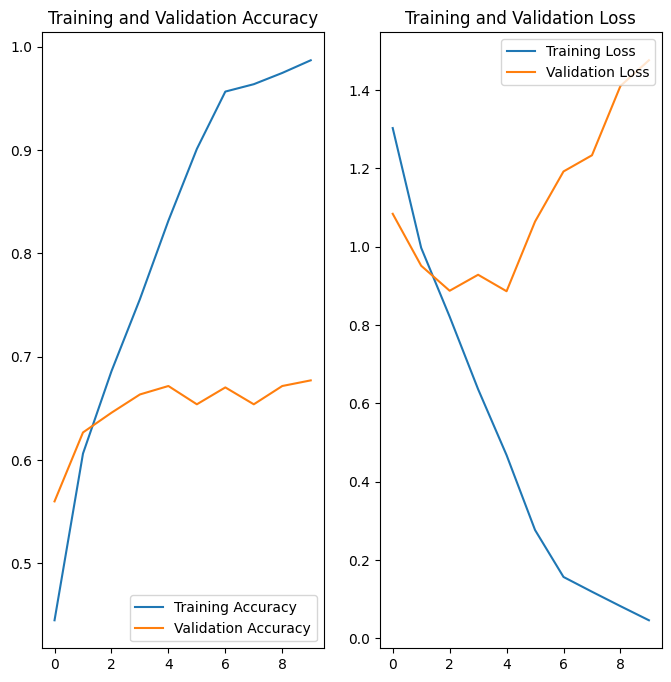
Overfitting happens when the model becomes too closely matched to training examples and performs less well on new data. One warning sign is training performance improving while validation performance stops improving or gets worse. TensorFlow’s image tutorial shows learning curves and ways to address this, including data augmentation and dropout. TensorFlow’s image classification tutorial.
Why many projects start with a pretrained model
A pretrained image model has already learned representations from an earlier dataset. Transfer learning reuses those representations for a new task, often by training a new output layer first. Fine-tuning can then update some of the earlier layers. This can reduce the amount of task-specific data and computing needed compared with training a large network from the beginning. TensorFlow’s transfer learning tutorial.
The reused model still needs evaluation on the photos you care about. A model trained on clear, well-lit pictures can struggle with a blurred camera feed or a different kind of subject. Collect examples from the intended setting and define how you’ll handle uncertain predictions.
Where deep learning fits within AI
AI covers a broad range of methods for performing tasks associated with intelligence. Machine learning includes methods that learn from data. Deep learning is one family within machine learning, built around layered neural networks. A decision tree is another machine learning approach.
Deep learning can support supervised, self-supervised, and other training approaches. “Deep” describes the model family. “Supervised” describes a learning setup using known target outputs. For a comparison using one dataset, see our guide to supervised and unsupervised learning.
Common questions
Does deep learning always need a huge dataset?
The data required depends on the task, the model, and whether you reuse a pretrained model. Start with representative examples and measure performance on held-out data before deciding what to collect next.
Is training the same as using the model?
Training updates the model’s parameters. Inference runs a trained model on new input to produce an output. An inference step usually leaves the parameters fixed.
Why do deep learning models make mistakes?
Possible causes include missing examples, incorrect labels, shortcuts learned from training data, and differences between training and real use. Inspect the actual failures so you can identify which issue is affecting your task.